
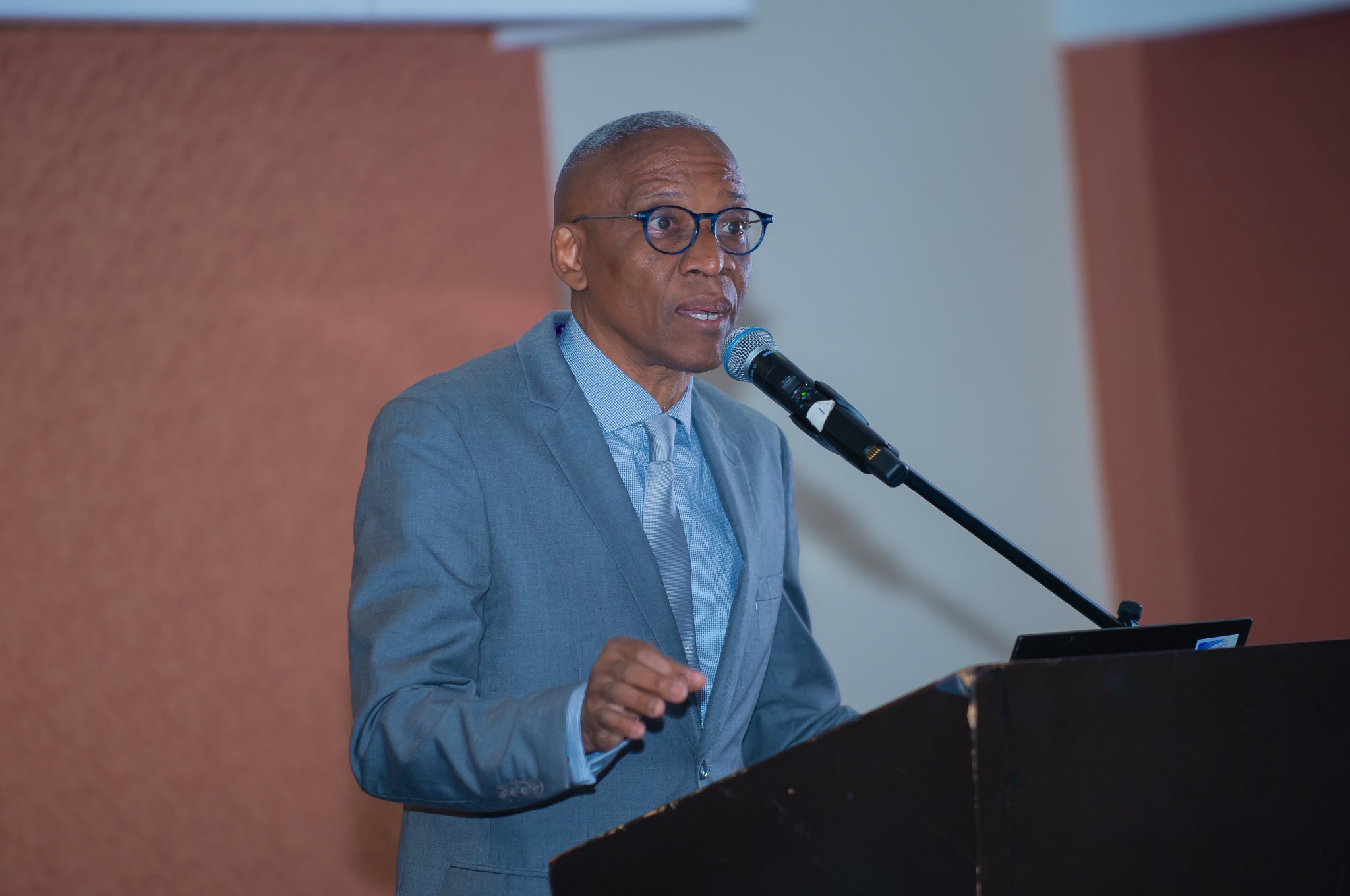
After eight years of recession, Kesner Pharel looks at the World Bank’s three growth scenarios and highlights the conditions needed for a sustainable recovery of Haiti’s economy.
After the publication of the World Bank report titled ‘Haiti: Growth Trajectory Amid Rising Risks,’ economist Kesner Pharel, invited to the Panel Magik show this Friday, September 18, 2026, discusses the growth prospects outlined for the country. Like the data on Haiti’s economy, which are overwhelming and alarming, the outlook isn’t very promising, and the country’s ability to achieve it can rightly fuel some pessimism. Several major scenarios are available for the country to get back on its feet after eight consecutive years of recession.The first one, which corresponds to an inertial Haiti, predicts growth of 0 to 2% per year over the next few years. This outlook won’t allow the country to fully recover, but it will break the cycle of negative growth. With such growth, “we’ll only be breaking away from the negative growth we’ve seen over the past years, which averaged 2% per year,” explains Kesner Pharel. With this scenario, productivity will still be low and the country will remain dependent on transfers. “If we stay between 0 and 2%, there will be persistent poverty over the next eight years,” warns the economist.The second perspective would focus on developing economic corridors, with development projects in other regions of the country, like the Far North and the Far South. “Let’s say we go ahead and develop the North and the South, the recovery could reach up to 2 to 3%,” says Mr. Pharel. With this kind of scenario, he expects an improvement in the security situation, the development of the North-South corridor, the reconstruction of the West, and a gradual return of investment. This scenario, called ‘stabilization’ and ‘recovery,’ is still not enough.
The last outlook, which would be by far the most optimistic but also the most unlikely at the moment, would assume an annual growth of 5 to 7%. And the country’s best asset for hoping to reach this goal is to take advantage of the opportunities offered by artificial intelligence. But such a scenario requires some prerequisites: restoring security, developing human capital, improving productivity, building infrastructure, industrializing the country, modernizing agriculture, mobilizing taxation, and strengthening private investment.
Given the economic and security situation, these three World Bank outlooks are, to say the least, hard to imagine in the short term. Even the prospect of stagnation is optimistic compared to the forecasts. Indeed, in April 2026, the International Monetary Fund (IMF) projected a negative growth (-1.7%) for 2026, though this is an improvement compared to 2024 (-4.2%) and 2025 (-2.7%). The international institution does not expect positive growth to return before 2027 (0.7%).
Progress on security, a condition necessary for resuming activities, also does not allow for expecting an improvement in the economic situation. Law enforcement forces are unable to reclaim lost territories, while, at the same time, new areas that had previously been spared are now under the threat of armed gangs.

