
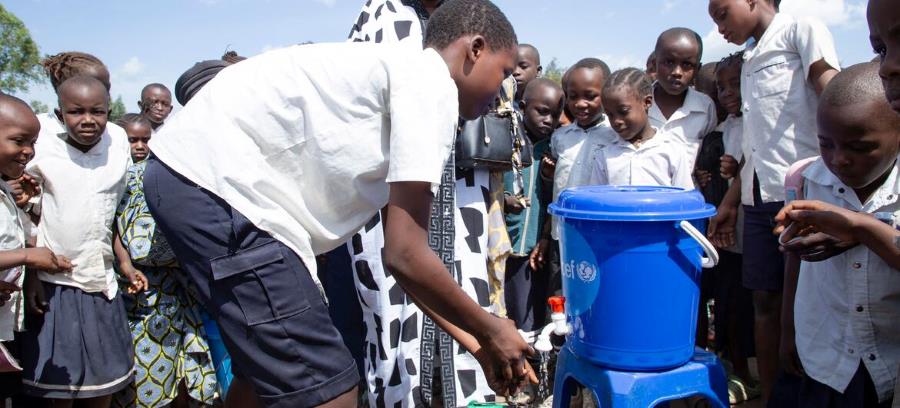
A new school year has started in many countries around the world; yet, millions of children still attend schools where the water isn’t safe to drink, the toilets are unusable, and there’s nowhere to properly wash their hands.
A new school year has started in many countries around the world; yet, millions of children still go to schools where the water isn’t safe to drink, the toilets don’t work, and there’s nowhere to properly wash their hands.
This is according to a report from the World Health Organization (WHO) and UNICEF, the United Nations agency for children’s rights, which reviews progress on water, sanitation, and hygiene (WASH) in schools between 2015 and 2025.
WASH services are essential in schools because they affect learning, health, and dignity, especially for girls.During this period, the proportion of schools with basic drinking water services increased from 67% to 78%. Global coverage for basic sanitation also improved, rising from 67% to 77%, as did basic hygiene, which went from 59% to 72%.
Progress at risk
Despite these improvements, the report warns that the world is not on track to ensure universal access by 2030, as outlined in the Sustainable Development Goals (SDGs).
It shows that in 2025:
545 million did not have basic hygiene services (water and soap for handwashing).
429 million school-aged children did not have access to drinking water services at school;
460 million did not have basic sanitation services;Inequalities Between Countries
Significant inequalities still exist, with the biggest gaps seen in low-income countries and fragile contexts, particularly in sub-Saharan Africa.
For example, only 54% of schools in low-income countries had basic drinking water services, while 50% had basic sanitation services and 35% had basic hygiene services. In comparison, coverage for these three services exceeded 99% in wealthier countries.
The Challenge in Sub-Saharan Africa
It’s in sub-Saharan Africa where coverage rates were the lowest. Less than half of the schools in the region had basic drinking water services (46%) or sanitation (43%). Only 39% of them had basic hygiene services.Worldwide, nearly three out of five children without access to safe drinking water at school — around 250 million — live in this region; it also has about 264 million children lacking basic sanitation services and 282 million without basic hygiene services.
Achieving universal access to basic drinking water and hygiene services in schools over the next five years would require quadrupling the current pace of progress, and quintupling it for sanitation services.
UNICEF has pointed out that “without faster action, hundreds of millions of children will still be deprived of these essential services at school by 2030.”

