
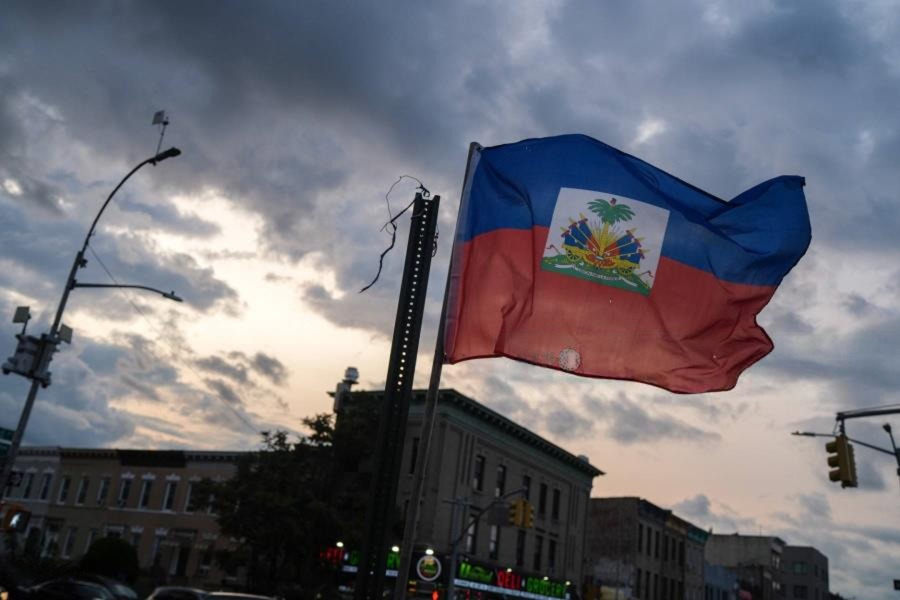
By Charlotte CAUSIT “We take care of sick people, we don’t commit any crime, so why hunt us like animals?” Like many Haitian caregivers living in the United States, Rachelle saw her life turn upside down and go underground because of Donald Trump’s anti-immigrant policies.
By Charlotte CAUSIT
“We take care of sick people, we don’t commit any crimes, so why hunt us like animals?” Like many Haitian caregivers living in the United States, Rachelle saw her life forced into hiding because of Donald Trump’s anti-immigrant policies.
After years spent at the bedside of American patients, this New York nurse now faces the threat of deportation along with hundreds of thousands of her fellow countrymen, a situation that puts a lot of U.S. hospitals, nursing homes, and care facilities that rely on them under stress.”I get up every day praying that they’ve changed their minds,” confides the thirty-year-old to AFP, speaking under a pseudonym for fear of the authorities.
At the end of July, the Temporary Protected Status (TPS), which allowed her to live and work temporarily in the United States due to the very bad conditions in Haiti, was revoked by the U.S. government.
Set up after the 2010 earthquake that devastated the country, this status recently still benefited about 350,000 people, a third of whom worked in health or social care, according to estimates.
That’s as many caregivers, nursing assistants, nurses, and doctors now prevented from working, details Nancy Hagans, a nurse who leads a union of New York caregivers.Beyond the tragic consequences for their lives, this dismissal “worsens the chaos” in an already struggling environment and harms patient care, she denounces.
Shortage of caregivers
“Just in the facility where I work, we had to let go of more than twenty-one people,” she reports. “And right across the street, there’s a retirement home that had to lay off hundreds of employees.”
In Florida, where a large Haitian community is settled, the situation affects many facilities and even forced two home care agencies to close, adds Denise Bellville, president of an association representing sector professionals.
While some caregivers continue working unofficially at home despite the risk of being arrested by immigration police (ICE), most employers have resigned themselves to laying off staff, she explains.And this despite the near-impossibility of replacing these employees. In this southeastern state, as elsewhere in the country, the sector was already facing a real staff shortage and relied heavily on immigrant labor to fill the lowest-paying jobs, like nursing assistants and home aides.
“Americans don’t choose this kind of job. It’s not their priority, and they can make more money doing something else,” like working at a fast-food restaurant or for Amazon, she laments.”Devastated”
The concern in the community is all the greater since the Trump administration has also revoked TPS for other countries, like Ethiopia, South Sudan, and Yemen, and is set to do the same soon for others like Ukraine, casting the shadow of deportation over more than a million immigrants.
So many departures will have an impact on Americans, warns Ms. Bellville. “It’s not just the employee being sent back to their home country; it affects all the patients they were taking care of,” especially those receiving care at home, who could then lose the ability to stay in their own homes.
While some healthcare facilities try to keep these caregivers by switching them to a different status, the procedures are usually very long and expensive, and have been made even more complicated by the Trump administration.Rachelle was hoping to soon embark on this long process when the axe fell.
“I was devastated,” recalls the young woman, who isn’t considering leaving for now due to the current security situation in Haiti, where yet another gang attack recently left around forty dead.
Especially since her son, whom she raises alone, suffers from a neurodevelopmental disorder and needs proper support that she wouldn’t be able to find elsewhere.
Faced with her situation and that of so many others, healthcare associations, sector players, and local officials are urging Congress to step in to restore protective status for Haitians.
A bill to that effect was passed by the House of Representatives in April and is now waiting in the Senate.”Whether they like it or not, they need us,” Rachelle keeps telling herself, wanting to believe in a positive outcome.

