
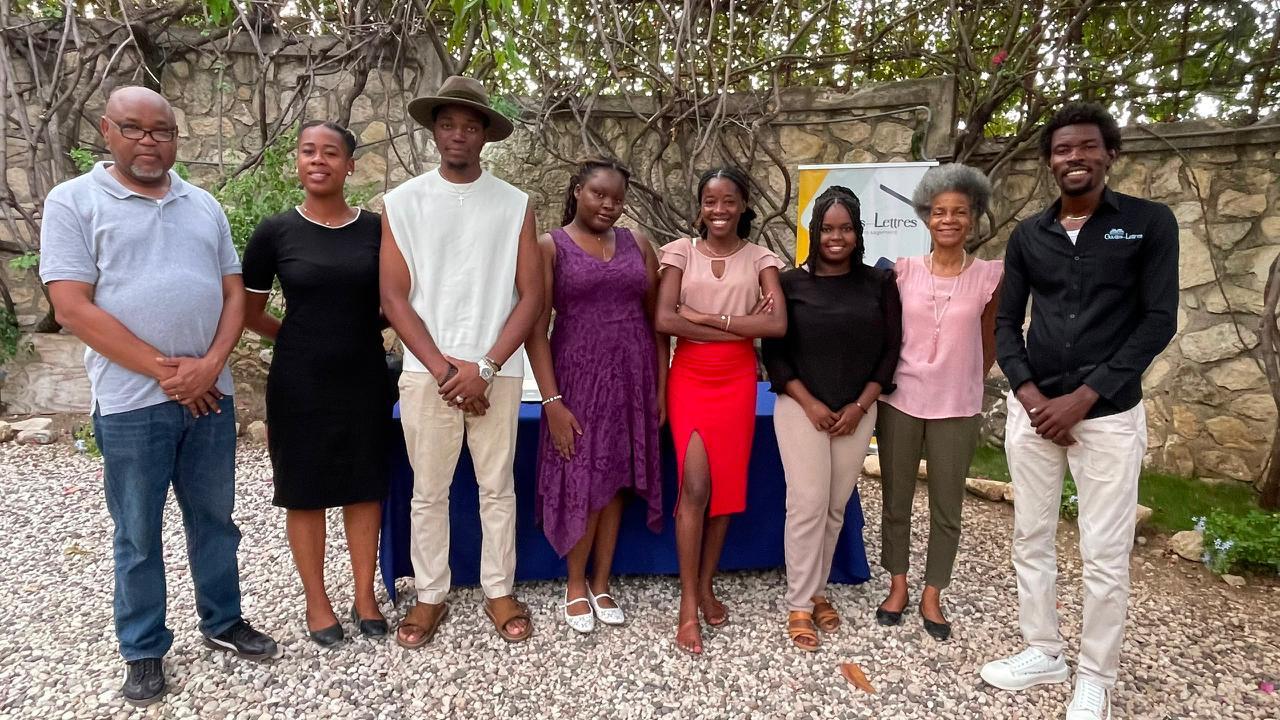
Under the high patronage of the Ministry of Culture, this Saturday, September 19, 2026, Gouttes-Lettres Publishing closed the first edition of their ‘Summer University of the Book and Publishing Practices’.
Under the high patronage of the Ministry of Culture, this Saturday, September 19, 2026, Gouttes-Lettres Editions wrapped up the first edition of their ‘Summer University of the Book and Publishing Practices.’ By going beyond a simple series of academic workshops, Gouttes-Lettres Editions laid the groundwork for a fundamental debate on the professionalization of the written word ecosystem in our country. They gave a masterful proof that, despite systemic failures and state indifference, there are still spaces for resistance through thought.Indeed, this closing ceremony, with its refreshing clarity, breaks away from naive enthusiasms or usual complacencies. For several days, writers, publishers, proofreaders, students, and aspiring professionals in the book industry came together to dissect a profession long perceived as mere craft guided by good intentions. For Mr. Dom Pedro, philosopher, publisher, and initiator of this project: “Organizing a summer university specifically dedicated to editorial practices is an exercise in critical foresight because making a book in Haiti cannot be reduced to the compulsive printing of manuscripts. It requires a thorough mastery of copyright law, an ethics of proofreading, a sustainable distribution strategy, and, above all, an economic vision capable of surviving the structural precariousness of the local market.”The highlight of this closing ceremony was the public tribute paid to the artisans who support, often behind the scenes and in precarious conditions, the structure of our intellectual production. Several prominent figures from the book industry, including the president of Communication Plus, Anaïse Chavenet, as well as steadfast booksellers, dedicated librarians, meticulous proofreaders, and finally the participants who were solemnly honored for their loyalty to the cause of the mind.
We can never stress enough how much the Haitian book industry is hanging by a thread over a void. Between the scarcity of professionals, the prohibitive printing costs, the chronic failure of distribution networks, and a constantly declining purchasing power, publishing in Haiti is a high-wire act, even a dystopian achievement. Yet, the excitement generated by this first cohort of the ‘Summer University of Books and Editorial Practices’ shows a demand for rigor that is gaining ground among emerging players. Les Éditions Gouttes-Lettres have realized that the future of Haitian literature doesn’t just depend on the talent of the writers that the country produces with almost miraculous abundance, but on the ability of our publishing structures to turn this raw material into finished literary objects that can circulate, compete, and endure.
Beyond considerations of editorial technique, this closing event marked a turning point in the way book policy is approached in the country. The reflections shared by Dr. Edelyn Dorismond, a philosopher, during this closing ceremony exposed institutional flaws while proposing pragmatic alternatives. It’s no longer about begging for hypothetical support from public authorities, but about directly equipping creative youth, formalizing skills, and building intergenerational solidarities between memory keepers and new builders. The summer university has established itself as a school of rigor where intellectual ethics meet professional demands.This first edition of the “Summer University of Books and Editorial Practices” served as a showcase for a great demonstration of perseverance. Dom Pedro concludes that the next steps of this adventure will play out in the areas of follow-up, the actual publication of new texts, and the strengthening of this network of book professionals, because it’s a huge undertaking, but a necessary one. In a country still desperately searching for the foundations of its reconstruction, reminding people that a nation’s sovereignty also depends on mastering its tools for publishing and spreading ideas is not just an intellectual fancy. It’s, simply put, a state duty that civil society and private initiatives fortunately continue to uphold with courage.

