
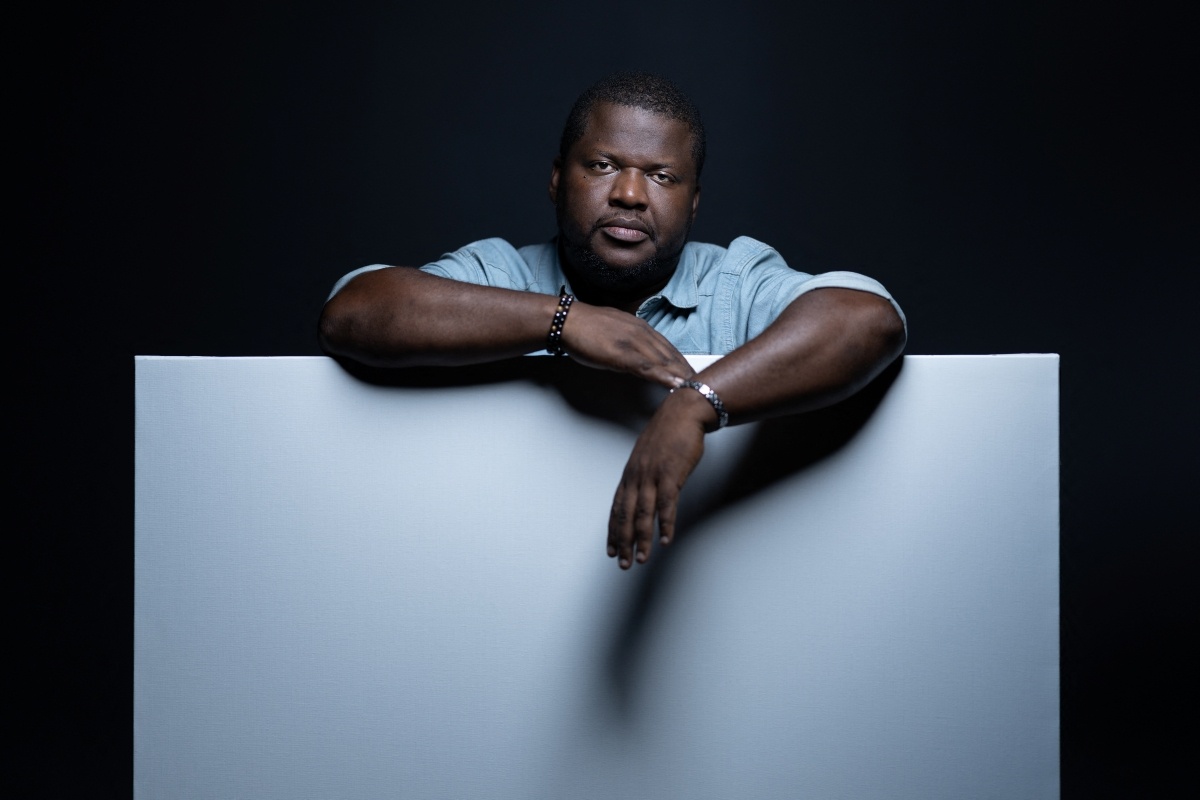
Accused on X of writing his novel with AI, Thélyson Orélien denies it. Computer detectors contradict each other, and the French-speaking press is calling for caution.
The Canadian-Haitian writer Thélyson Orélien finds himself at the center of a controversy that won’t die down. Since Monday, an anonymous account has accused him on X of having C’était ça ou mourir, his first novel published in France by Grasset, written by artificial intelligence. The timing is unfortunate: the book just won the Fnac Novel Prize and is on the shortlist for the Goncourt, Médicis, Femina, and Renaudot awards.
To defend himself, the author highlights the Haitian and Caribbean oral traditions that run through his prose. Researchers interviewed by the Belgian and Quebec press believe that detection software can indeed mistake a distinct literary style for a machine’s signature.The Writer’s Denial
The accusation comes from “Balance ton Claude,” an account that only had 92 followers at the time. According to it, the novel was written “almost entirely” by an AI. It claims to have submitted about twenty excerpts to Pangram, software designed to detect texts produced by artificial intelligence.
The message spread very quickly. According to the website of the Belgian public media RTBF, it was reshared more than a thousand times and seen over three million times. AFP, cited by several media outlets, was unable to identify the person behind the account.
Thélyson Orélien denies everything. “I’ve always loved creating and writing, I don’t see why I would turn to a machine,” he told the French daily Libération.With his publishers in France and Quebec, he is preparing a file on the genesis of the novel. He admits to having been affected by the attacks. And he reflects on what he believes makes his writing unique: “My traditions are Haitian and Caribbean. The images, the repetitions, and the rhythms are a living speech; they are mine.”
The remark is not insignificant. Detectors are specifically looking for style consistencies.
Contradictory verdicts
AFP submitted the passages flagged by the account to other tools. InVID-WeVerify, a verification software co-developed by the agency, judged them as “very likely written by a human.” Out of seven other detectors, only one concluded 100% AI-authored. Two said the opposite. The remaining four gave different results depending on the excerpt.The same text therefore changes status depending on the software used.
Libération took a look at Pangram. The newspaper reminds that the tool performed well in certain independent evaluations, including a study by researchers at the University of Chicago published in 2025. However, that same study noted that a more sensitive detector also produces more false positives. Max Spero, CEO and co-founder of Pangram, says it himself: his tool should “never be the final arbiter.” He presents it as a starting point for investigation.
The warning from the experts
Denis Teyssou, head of AFP’s Medialab, explains why the task is so difficult. An AI-generated image can contain technical markers or a digital watermark. A text, on the other hand, is made up only of words and punctuation. So the software can only rely on statistical patterns.Yves Deville, a professor at the Louvain School of Engineering (Belgium), goes in the same direction. Asked by RTBF, he believes that a detector can respond more to an author’s style than to the actual origin of the text. Language also matters: a tool trained on certain corpora struggles more with unusual Francophone literary prose. On the case of Orélien, his stance is clear. An analysis by Pangram “does not at all constitute proof that the book was written with AI.”
RTBF also cites researchers from Vrije Universiteit Brussel who put Pangram’s error rate at 2.5%. The company, on the other hand, claims about one false positive in 10,000. The two figures don’t exactly measure the same thing, and comparing them requires caution. But the gap clearly shows that no detector is infallible.In Montreal, the newspaper La Presse ran its own test. The novel’s 64,103 words were put through Pangram, which concluded that 94% of the text would have been written with the help of AI.
The newspaper didn’t stop there. It also submitted columns and poems by Orélien from before 2020 to the software: Pangram attributed them to a human. The same verdict came for texts by other Quebec and Haitian authors. For Hugo Larochelle, scientific director at Mila, a research center in artificial intelligence, these results make the idea that the author’s style influences the software plausible.Support and Suspicion
Grasset has denounced claims presented as certainties and reiterated its confidence in the writer. In Quebec, Éditions du Boréal, which published the novel before its release in France, remind that the first draft dates back several years. The text was then reworked through numerous exchanges with the editor and several versions of the manuscript.
These steps, if documented, could weigh on the case the author is preparing.
In the book world, concern is rising. Literature sociologist Michel Lacroix fears, in the Quebec newspaper Le Devoir, that doubt alone may now influence jury deliberations. No use of AI has been demonstrated. But jurors must deal with a controversy whose technical aspects they do not necessarily understand.
Writers speak of a new ‘era of suspicion.’ Some have tested their own texts and received high scores for supposedly artificial content.The French daily La Croix points out ‘serious areas of uncertainty’ in the accusations. The newspaper reminds readers that using AI, if it were proven, would not in itself be a crime. The issue also touches on intellectual property and the use of human works to train models.
This Wednesday, September 23, Libération devotes a few pages to the case. The editorial emphasizes the doubt. The investigation looks into the limits of Pangram. A profile traces the writer’s journey, his exile, and the Haitian and Caribbean sources of his work.
Not all media outlets defend Thélyson Orélien. But those that have checked come to the same conclusion: the accusations rely on tools whose results vary and whose creators themselves acknowledge the limitations.In the meantime, the writer maintains that he didn’t use AI, and his publishers back him up. The promised file on the novel’s origins will probably be the next step. It will also be interesting to see if the juries of the Goncourt, Médicis, Femina, and Renaudot keep ‘It Was That or Die’ on their next lists.

