
The forty-first session, the main biennial meeting of the UN regional commission, will be held in Santiago de los Caballeros and will bring together representatives from the 45 member states and the 14 associate members of ECLAC.
The forty-first session, the main biennial meeting of the UN regional commission, will be held in Santiago de los Caballeros and will bring together representatives from the 45 member states and the 14 associate members of ECLAC.
From October 7 to 9, in Santiago de los Caballeros (Dominican Republic), the Economic Commission for Latin America and the Caribbean (ECLAC) will hold its forty-first session, the most important biennial gathering of this UN regional commission. At this high-level meeting, ECLAC will present its analysis on how to manage the productive, social, and environmental changes needed for the region’s prosperity in the new global geopolitical and geoeconomic landscape.This international gathering will bring together authorities from the 45 member states and 14 associate members of ECLAC, representatives from the United Nations system and other intergovernmental organizations, as well as actors from the private sector and academia. The countries will thus have the chance to discuss the region’s economic, social, and environmental development, learn about the work carried out by the Commission during the previous period, and set priorities for the work program for the coming years.
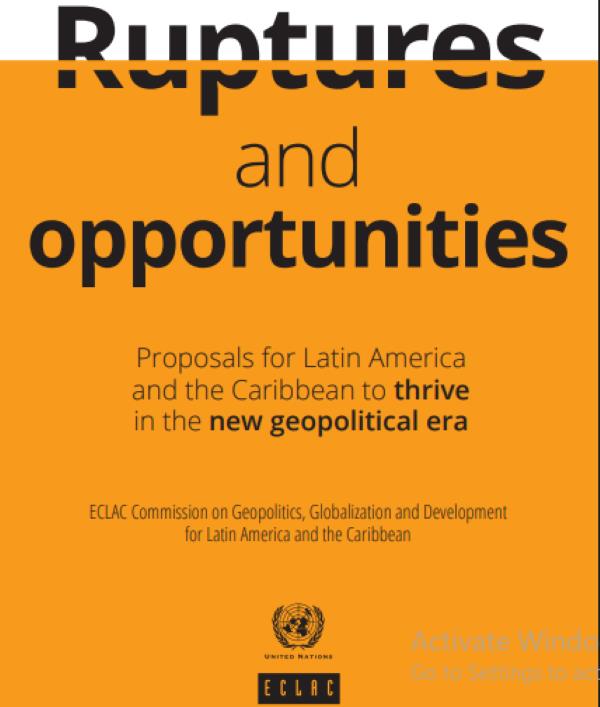
The meeting will officially kick off on Wednesday, October 7 at 2:30 PM (local time, UTC/GMT -4) with Luis Abinader Corona, President of the Dominican Republic; José Manuel Salazar-Xirinachs, Executive Secretary of ECLAC; and Gustavo Lembcke Hoyle, Ambassador of Peru to the Dominican Republic.The top representative of this regional UN organization will present to the countries in the region the position paper titled Managing Transformations in an Era of Disruptions. This paper looks at the drastic changes in the external development conditions, aiming to understand, anticipate, and successfully navigate this new global landscape. It also explores possible ways to address development challenges — the ‘how’ — by introducing a new analytical framework on governance and institutions, focused on the transformative capacities paradigm as a prerequisite for sustainable structural change..On Thursday, October 8, the Dialogue of Ministers and High-Level Authorities — designed as a space for political reflection and strategic dialogue on the future of Latin America and the Caribbean — will include the presentation of the document titled Breaks and Opportunities: Proposals for Latin America and the Caribbean to Thrive in the New Geopolitical Era. This document was prepared by the ECLAC Commission on Geopolitics, Globalization, and Development in Latin America and the Caribbean, with the participation of several of its members.
The program also includes a high-level technical seminar aimed at taking a close look at this reference document. The seminar will be organized around three thematic panels: i) a new stage of regional integration: what to do and how to move forward; ii) digital transformation, artificial intelligence, and productive development; and iii) macroeconomics in the service of development and solid, effective taxation.
This meeting will mark the beginning of the Dominican Republic’s presidency of ECLAC — a term that will continue until the next session in 2028 — as well as the end of Peru’s current presidency, held since the 40th session in Lima in 2024.
The full meeting program, along with general information, is available on the event’s dedicated website: https://periododesesiones.cepal.org/41/e.

