
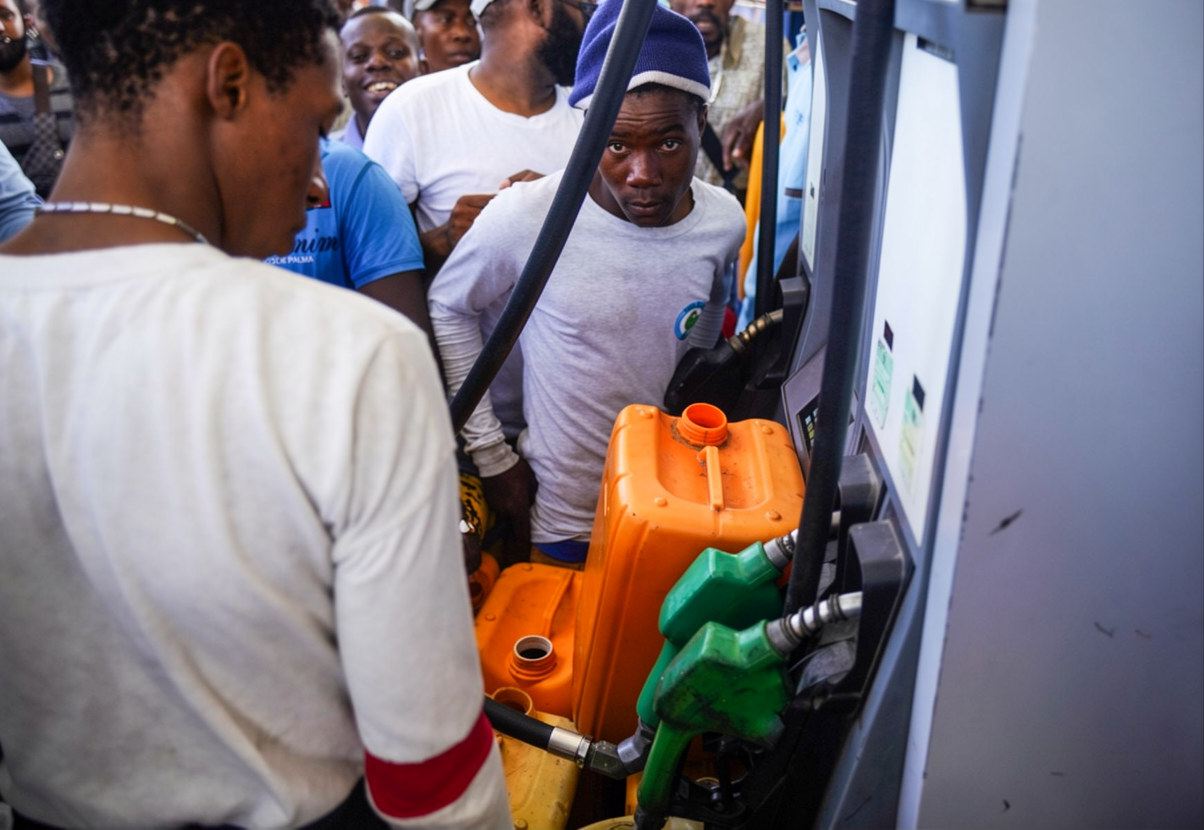
For almost three weeks now, fuel quality problems have been causing significant damage to the vehicles of many Haitian consumers.
For almost three weeks now, fuel quality problems in circulation have been causing significant damage to the vehicles of many Haitian consumers. For economist Peterson Benjamin Noël, guest on Magik 9 on September 25, 2026, the current crisis goes beyond a simple faulty product; it reveals the deep limitations of the national quality control system.
Yesterday it was medicine. Today it’s fuel. Tomorrow, what will it be? The question many people are asking speaks for itself about the scale of the problem. Car drivers, motorcyclists, and other consumers are seeing their equipment damaged and their budgets cut by thousands of gourdes. For Peterson Benjamin Noël, this isn’t just a sectoral crisis; it’s a symptom of a failing institutional control system. “The first problem is control,” he says right away.The principle put forward by the economist is simple: government intervention shouldn’t start after consumers have already used the product and the damage has been observed. Oversight should happen upstream, at the point of import, not downstream. “You need to take a sample of the oil, go to a national lab, test the gas in the oil, check that there are no harmful substances for the public,” he explains. Only after approval should the product be allowed to be released and circulated.This preventive logic doesn’t just apply to fuel. It should extend to medicines, agricultural products, and any goods that could impact the health or safety of the population. So the problem is less about a specific sector and more about a control system that isn’t fully effective on a national scale. ‘Importing is a whole process,’ says the economist, and this process needs to be guided by clear responsibilities and institutions capable of enforcing them.
Assigning Responsibilities
For Peterson Benjamin Noël, the issue of institutional responsibilities is crucial. Customs, the Ministry of Commerce and Industry, agricultural services, and laboratories all have different roles, and each should be able to carry out their own. “It’s really important to set responsibilities,” he emphasizes. Customs has a role related to controlling what comes into the country. Specialized agencies need to check that products meet the standards. The Ministry of Commerce should have mechanisms in place to ensure that standards are being followed.The economist particularly emphasizes the need for a standards office capable of coordinating the various activities related to standards and laboratories. Such an office was recently created by decree, but its existence alone is not enough. It also needs to have the human, technical, and financial resources required for it to function effectively. In the case of fuel, he considers the sampling done after complaints arose to be a late intervention. Traceability—knowing the origin of products, their importer, and their journey to the point of sale—is essential to identify responsibility. He mentions the model of the Dominican Republic as an example of a system that allows products to be tracked and the relevant players to be located.
Peterson Benjamin Noël refuses to reduce the problem to just corruption. Institutional weaknesses can themselves cause significant economic and social consequences. “We shine a spotlight on corruption, but we also need to highlight the damage that can’t be measured,” he explains. Damaged engines, economic losses for consumers, health risks—the costs of a failing control system are huge, even without any fraudulent behavior.That said, he doesn’t excuse private actors either. ‘You shouldn’t just go after the Ministry of Commerce or public administration, there are private sector agents who themselves behave badly,’ he says, mentioning the possibility that some economic operators use their power to influence public officials. So the problem involves both state institutions and certain private sector actors.Three areas to strengthen the system
Facing these challenges, the economist suggests a gradual approach. In the short term, he recommends setting up coordination mechanisms between the Ministry of Commerce, customs, agriculture, and the standards office, as well as mechanisms to hold importers accountable. “There needs to be a responsible importer,” he emphasizes. In the medium term, strengthening the laboratories is essential, particularly Tamarinier, whose capacity is currently largely underused. In the long term, the regulatory framework needs to be reinforced so that Haitian companies can also meet the requirements of foreign markets. He finally suggests thinking about insurance mechanisms that would further hold importers accountable so that those putting products on the market take on part of the risk related to their quality.The fuel crisis is thus becoming a sign of a much bigger problem. For Peterson Benjamin Noël, strengthening skills, laboratories, standards, and traceability wouldn’t just help better protect consumers; these measures could also help reduce areas that favor corruption. ‘These skills are things that can let us change a bunch of stuff, and even help us fight corruption,’ he concludes. Meanwhile, the lack of quality control keeps quietly causing damage, destroying machines and lives along the way.

