
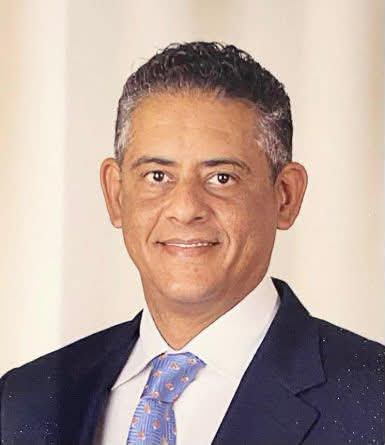
On the occasion of Industry Week, David Coles, president of the Association of Haitian Industries (ADIH), defended national production as a pillar of the country’s economic reconstruction and paid tribute to those who keep investing despite everything.
On the occasion of Industry Week, David Coles, president of the Association of Haitian Industries (ADIH), defended national production as a pillar of the country’s economic reconstruction and paid tribute to those who keep investing despite everything.”I believe that everyone working in industrialization, everyone investing in this country right now, are heroes.” A striking statement that, however, is not just rhetoric but reality. Indeed, entrepreneur, logistics specialist, and president of ADIH since July for a two-year term, David Coles, guest on Panel Magik on September 30, 2026, speaks from experience. He knows what it takes to run a business in Haiti in 2026. And that’s exactly why, for him, Industry Week isn’t just a showcase. It’s a reminder of the importance of those who keep producing.Being an entrepreneur in Haiti today means navigating an environment where almost everything complicates production. According to the president of ADIH, insecurity is the main obstacle and perhaps the most devastating. “Some have seen their premises vandalized, looted, or destroyed. Others have lost stock, equipment, years of work in just a few hours,” he says. Moreover, transporting goods from one point to another in the country has become a challenge, with entire areas hard to access, blocked roads, and delays that keep getting longer. Even getting employees to their workplace has become a daily problem.
On top of insecurity, there are high production costs. Electricity remains a challenge for an industry that needs consistency. Imported raw materials weigh on costs. Logistics have also become more difficult. Added to that are financing problems: sometimes unaffordable rates, banks hesitant to take risks in such an uncertain environment, and guarantees that financially fragile entrepreneurs can’t always provide. It’s basically utopian for local entrepreneurs, with all these costs, to compete against cheap imports. The result: nearly 80% of what Haitians consume comes from abroad, the entrepreneur says.David Coles sums up the situation by talking about ‘eight years of economic contraction,’ marked especially by falling exports and the challenges companies have been facing. He believes that some of them now need support to get their production capacity back. At this stage, ‘we need recapitalization mechanisms,’ he says, calling for the implementation of suitable financing mechanisms, guarantees, and funds to help affected companies recover.An industry that exists and needs to go further
Despite this context, the Haitian industry is present, and David Coles wants to make that clear. Pasta, drinks, rum, cereals, essential oils, hygiene products, paper, detergents, packaging, plastics, construction materials, electrical components, textiles: companies produce, employ people, and create value. But their potential is still largely untapped. Cocoa, coffee, mangoes, fruits and vegetables, pharmaceuticals, recycling, and fishing are all sectors that could grow much more if conditions allowed.”We have enormous potential in agriculture,” emphasizes the president of ADIH, who sees agro-industry as one of the country’s development opportunities. Essential oils are already an export product, and in the past, mangoes have brought in several million dollars in exports. In this sense, he believes the challenge would be to further process the resources available in Haiti instead of systematically importing products that could be made locally.“Industry creates jobs, adds value, and allows us to reduce our dependence on imports,” explains David Coles. However, he believes that entrepreneurs can’t shoulder the weight of economic recovery on their own. They need concrete solutions, and he manages to pinpoint them clearly. Recapitalizing weakened businesses is an immediate priority: appropriate financing mechanisms, accessible rates, guarantees that let banks take more risks, and dedicated funds for struggling companies.
The import of raw materials and equipment should also be made easier. The entrepreneur specifically mentions the possibility of granting tax and customs exemptions on products needed for production. Besides that, energy is another priority. ‘We need reliable and cheaper electricity,’ he says. Without affordable energy, companies struggle to maintain steady and competitive production. Infrastructure also needs to support this goal. Ports, roads, electricity, and transportation means are essential for businesses to produce and deliver their goods.Developing the regions
Industrial ambition shouldn’t be limited to Port-au-Prince either. David Coles calls for a national approach that takes into account the unique realities of the different departments. “We need to have industrial ambition for the North, for the South, for the Central region, for all the departments,” he says. Industrial development should therefore start from the resources available in each area. Agribusiness, fishing, or even construction materials can offer different opportunities depending on the territory. But to allow these sectors to grow, we also need to invest in the necessary infrastructure. Ports, electricity, and transport networks should be planned according to the economic activities each region wants to develop.David Coles thus calls for a structured industrial policy carried out over several decades. Entrepreneurs need clarity to understand the environment they are investing in, what infrastructure will be available, and what tax or customs conditions will apply. He also advocates for a vision that goes beyond changes in government and immediate emergencies. ‘We have to keep believing that national production is what sustains us,’ he keeps repeating.
The president of ADIH wants this direction to be maintained for the next twenty or thirty years. For him, producing more in Haiti, creating jobs, and processing local resources are not just immediate economic goals. They are choices that can shape the opportunities available to future generations. And in this struggle to keep national production going despite the challenges, David Coles believes that those who continue to invest and work in Haiti deserve special recognition.

