
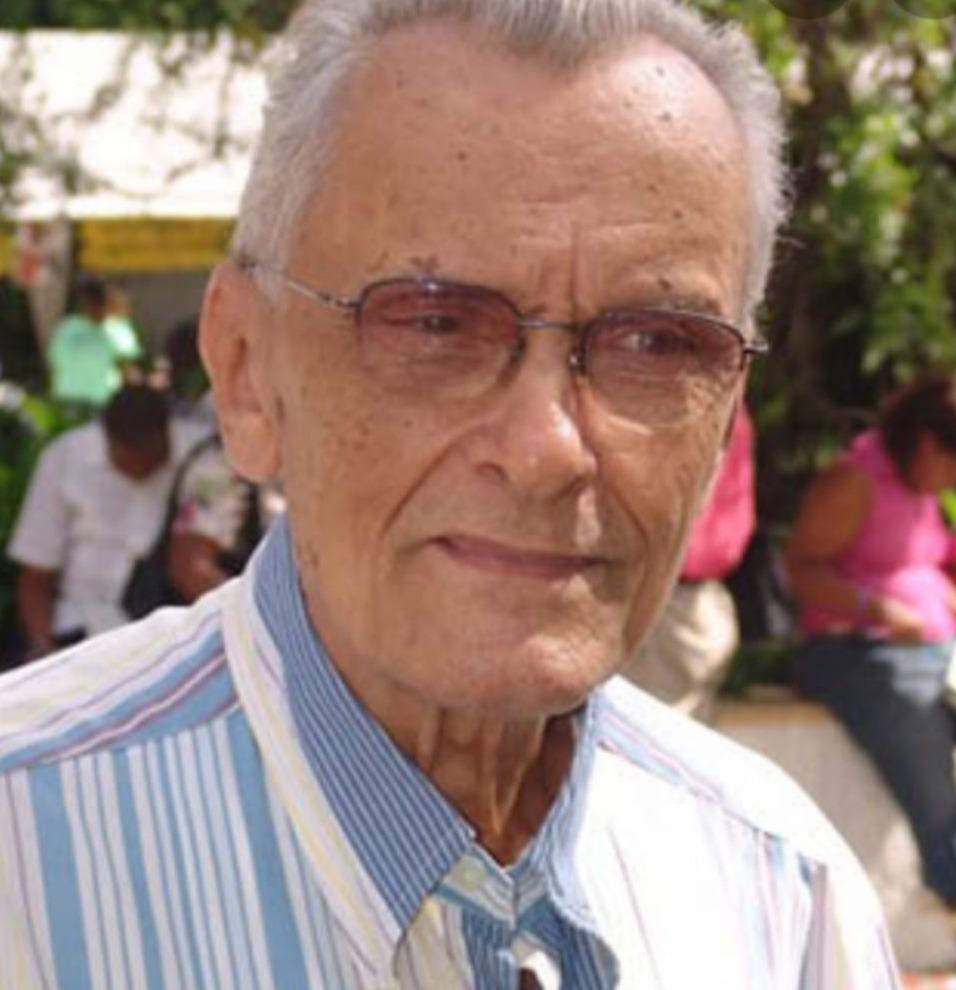
Through the various volumes of Port-au-Prince over the years, Georges Corvington has done research and documentation work of exceptional value.
Several personalities have left their indelible mark on Haiti’s intellectual and cultural history. Through the depth of their thinking, the richness of their work, and their contribution to understanding our society, they have earned a special place in the national heritage. Some of them have rightly become true treasures of Haitian collective memory. Among these great intellectual figures stands out Georges Corvington, a Haitian writer and historian, best known as the historian of Port-au-Prince, who would have celebrated his 100th birthday this Friday, November 6, 2026.Born in Port-au-Prince on November 6, 1926, Georges Corvington belongs to that category of intellectuals whose work goes far beyond the limits of their time. His name remains inseparably linked to the history of Haiti’s capital, which he set out to tell, document, and bring back to life through a monumental work titled Port-au-Prince over the Years. This historical series, which is one of the most remarkable works devoted to Haiti’s urban history, earned him the widely recognized title of historian of Port-au-Prince.A monumental work in the service of historical memory
Through the different volumes of Port-au-Prince over the years, Georges Corvington has carried out research and documentation work of exceptional value. He didn’t just recount the events that marked the capital; he set out to capture the entire historical trajectory of a city, from its colonial origins to the transformations of the first half of the 20th century.His work covers several key periods in our history: the colonial city (1743-1789), Port-au-Prince during the upheavals of the Revolution (1789-1804), 19th-century Haiti’s main city, the capital under American occupation (1915-1934), and the contemporary city. Through this broad historical panorama, the author helps the reader understand how Port-au-Prince gradually built itself up, grew, and changed in response to the political, economic, social, and cultural upheavals that have shaped Haiti.The importance of this work lies mainly in its ability to make the history of the capital converse with that of the nation. Indeed, Port-au-Prince is not just a geographical area or a simple administrative center: it is the stage for major political decisions, institutional crises, social movements, and transformations that have deeply influenced the fate of the Haitian people. By telling the story of this city’s evolution, Corvington also tells, from a particular angle, an essential part of the national history.His contribution is all the more significant because he managed to shed light on aspects of our past that are often overlooked: the evolution of neighborhoods, changes in urban spaces, people’s habits, social practices, economic activities, public buildings, and architectural changes. In other words, his history of Port-au-Prince isn’t limited to great men, presidents, and political events. It also gives importance to the daily life of residents, meeting places, common habits, and societal changes.This approach gives his work a particularly valuable dimension. It allows you to understand not only what Port-au-Prince used to be but also how it became what it is today, a city in agony.
For historians, researchers, students, and anyone interested in the evolution of Haitian society, Corvington’s work is therefore an essential documentary resource.A historian beyond Port-au-Prince
Limiting Georges Corvington to just his series Port-au-Prince over the years would, however, be insufficient to gauge the full extent of his intellectual contribution. He also published other works that reflect his interest in the historical and architectural heritage of the capital.
Among his publications are notably Pages de jeunesse, as well as The National Palace of the Republic of Haiti, dedicated to one of the most emblematic monuments in the political and institutional history of the country. Through this latter work, the author helps preserve the memory of a building that has long symbolized the authority of the Haitian state and the continuity of republican institutions.It’s also worth highlighting his work dedicated to La Cathédrale de Port-au-Prince: Histoire d’une construction. This book shows his commitment to the architectural and religious heritage of the capital. By tracing the history of this cathedral, Corvington isn’t just focused on a religious building; he helps document an important element of Port-au-Prince’s historical, cultural, and symbolic identity.
Through these various publications, the same concern comes through: to save the material and immaterial traces of our history from being forgotten. His work reminds us that monuments, streets, public squares, and old buildings aren’t just constructions. They are silent witnesses of the generations that came before us and represent important pieces of our shared heritage.A work of particular relevance given the disappearance of Port-au-Prince’s heritage
A hundred years after his birth, Georges Corvington’s work takes on an even more special resonance in light of the current situation in Port-au-Prince. A capital facing deep changes, the deterioration of its architectural heritage, the disappearance of many historical spaces, and often chaotic urban development.
As some neighborhoods change their look, historic buildings vanish, and the city’s traditional landmarks fade away, Corvington’s writings become more than just historical documentation: they create a real substitute memory, an essential testimony about a city whose past is at risk of being forgotten.His work reminds us of an obvious truth: a people who are not familiar with the history of their cities, monuments, and living spaces gradually risk losing part of their identity. Knowledge of the past should therefore not be seen as a luxury reserved for intellectuals, but as a necessity for any society that wants to preserve its heritage and build its future.
In this regard, Georges Corvington deserves not only to be read and celebrated, but also to be studied in our schools and universities. His books should serve as references for teaching national history, urban history, and the protection of Haitian heritage. They could also inspire new research on the evolution of Port-au-Prince and the policies needed to safeguard its historical treasures.A survivor of the earthquake, a witness to the fragility of our heritage
Georges Corvington’s journey was also marked by one of the greatest tragedies in Haiti’s contemporary history: the devastating earthquake of January 12, 2010. His house in Port-au-Prince had collapsed under the violent tremors. The historian, found under the rubble of his home on Chériez Street, survived the collapse but unfortunately lost a significant portion of his books and documents.

