
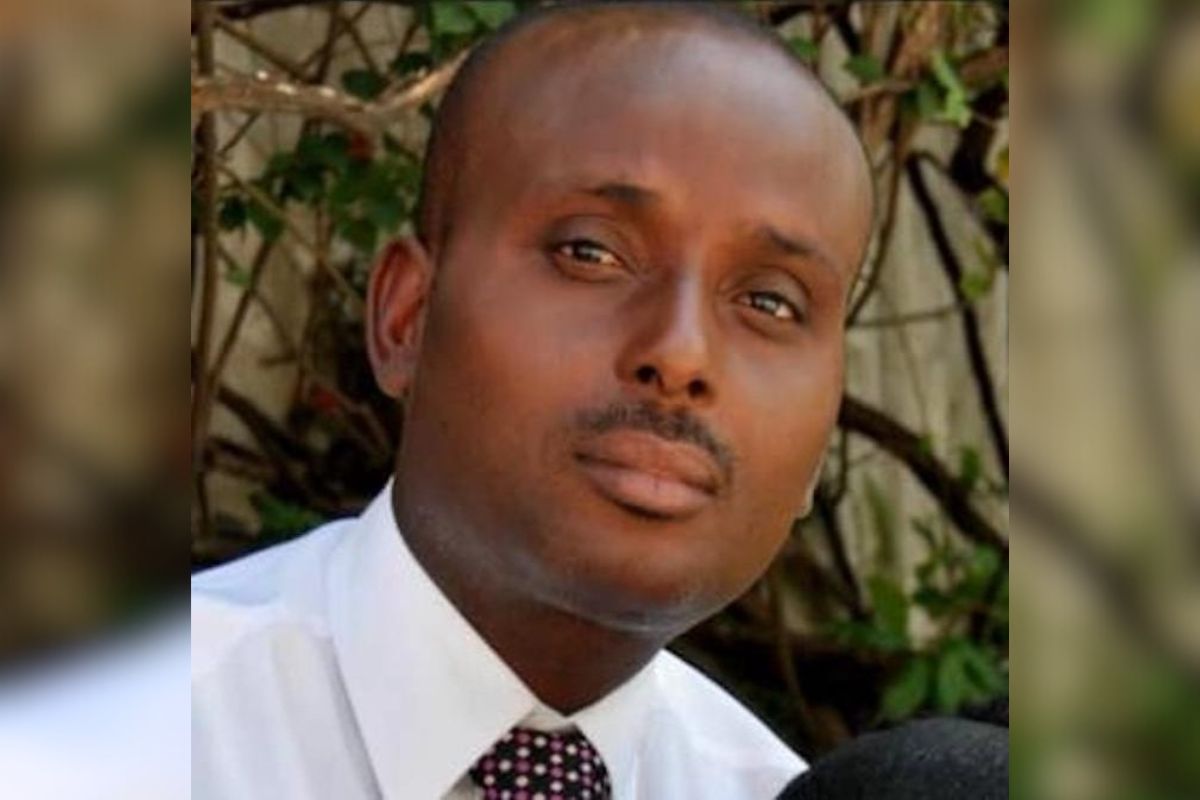
At the New York International Book and Arts Fair on September 12, 2026, Mafouna Laurent, older sister of Schultz Laurent Junior, paid a heartfelt tribute to this man of letters, teacher, cultural journalist, poet, and short story writer.
At the New York International Book and Arts Fair on September 12, 2026, Mafouna Laurent, the older sister of Schultz Laurent Junior, paid a heartfelt tribute to this man of letters, teacher, cultural journalist, poet, and short story writer. Through a personal testimony full of warmth and gratitude, she recalled the journey of a passionate intellectual, deeply committed to sharing knowledge, culturMafouna Laurent, older sister of Schultz Laurent Junior
Ladies and Gentlemen,
First of all, I would like to thank the organizers of the New York International Book and Arts Fair for reserving, in the heart of this wonderful event, a moment in memory of my brother, Schultz Laurent Junior.
Talking about Schultz in just a few minutes is not an easy task. He was my brother, of course. But he was also my friend. And my confidant. So tonight, rather than sketching his portrait through dates and titles, I would simply like to open a few pages of the man I knew.e, and caring for others. A tribute that celebrates not only the man but also the literary and human legacy he leaves behind.Very early on, Schultz had a relationship with words, books, and knowledge that seemed natural. I can still see myself back in ninth grade, at the Sisters of Saint Francis of Assisi. He was in seventh grade at the Canado-Haitian College. Two years behind me. Just a kid. And yet, he was the one helping me with my Haitian literature homework and history essays. Can you imagine the scene: the big sister leaning over her notebook, and the little brother explaining.
What impressed me wasn’t just that he knew. It was that he already knew how to build things. To introduce, unfold a thought, lead to a conclusion, with an ease beyond his years. He spoke about authors like you talk about people you know. Over the years, I realized it wasn’t just a brilliant student helping his sister. He was already the teacher. He was already a man of letters. He was already a writer.After the death of our parents, we grew up with our aunts, who were teachers. In that house, education was no joke. And Schultz found his calling there. During summer vacation, when most kids were just dreaming of closing their notebooks, he would take up work again, correcting, explaining. For his own pleasure. Passing on knowledge, for him, wasn’t a job you learn. It was a way of being.
This love for teaching stayed with him for nearly thirty years. Trained at the Collège Canado-Haïtien, the Centre d’Études Secondaires, and then at the Institution Georges Marc, before specializing in communication and journalism, he taught Haitian and French literature, philosophy, social sciences, art history, and citizenship education in several schools in Port-au-Prince.Literature. And citizenship. Both together. It’s no accident. Schultz believed that learning to read a text and learning to live in a country were part of the same act. He didn’t just train students: he trained readers and citizens. He also ran his schools’ magazines — CMRI Magazine, Le Gédéonniste — because he didn’t want his students to just read other people’s words. He wanted them to write their own. Generations of students went through his hands. Many still remember his voice.But his desire to teach went beyond the walls of the school. Schultz had founded Feux d’Art, a literary group that brought together young people passionate about culture, especially music, dance, and literature. Some already had a taste for literature; others were still discovering it. They would meet every Sunday afternoon to read, sing, share, and learn together. Schultz would accompany them, encourage them, and share what he knew. Once again, he was doing what he deeply loved: passing on knowledge and helping others develop their talents.
At the same time, for over twenty years, Schultz was one of the voices of Haitian cultural journalism. Le Nouvelliste. Le National. C3 Hebdo. La Tribune. Écho Ayiti. La Scène. Literary criticism, performing arts, artist profiles, cultural life in Haiti and beyond: he wrote about everything that tells the story of a people.He lent his pen to tributes paid to great Haitian authors, notably Lyonel Trouillot and Michel Soukar. And until the summer of 2024, he was still being invited to talk about his craft, alongside critics and foreign journalists, to discuss what had always guided him: memory, independence of perspective, and the demand for beauty.
But Schultz was not a man of a single identity. Teacher, journalist, poet, short story writer: for him, literature was neither a profession nor just an intellectual exercise. It was his way of inhabiting the world. Of observing. Of feeling. Of giving back.
He leaves us five books:
Bouquet d’amour, his first collection, prefaced by Aubelin Jolicoeur.
Et si mon cœur te chantait.
Des printemps fanés.

