
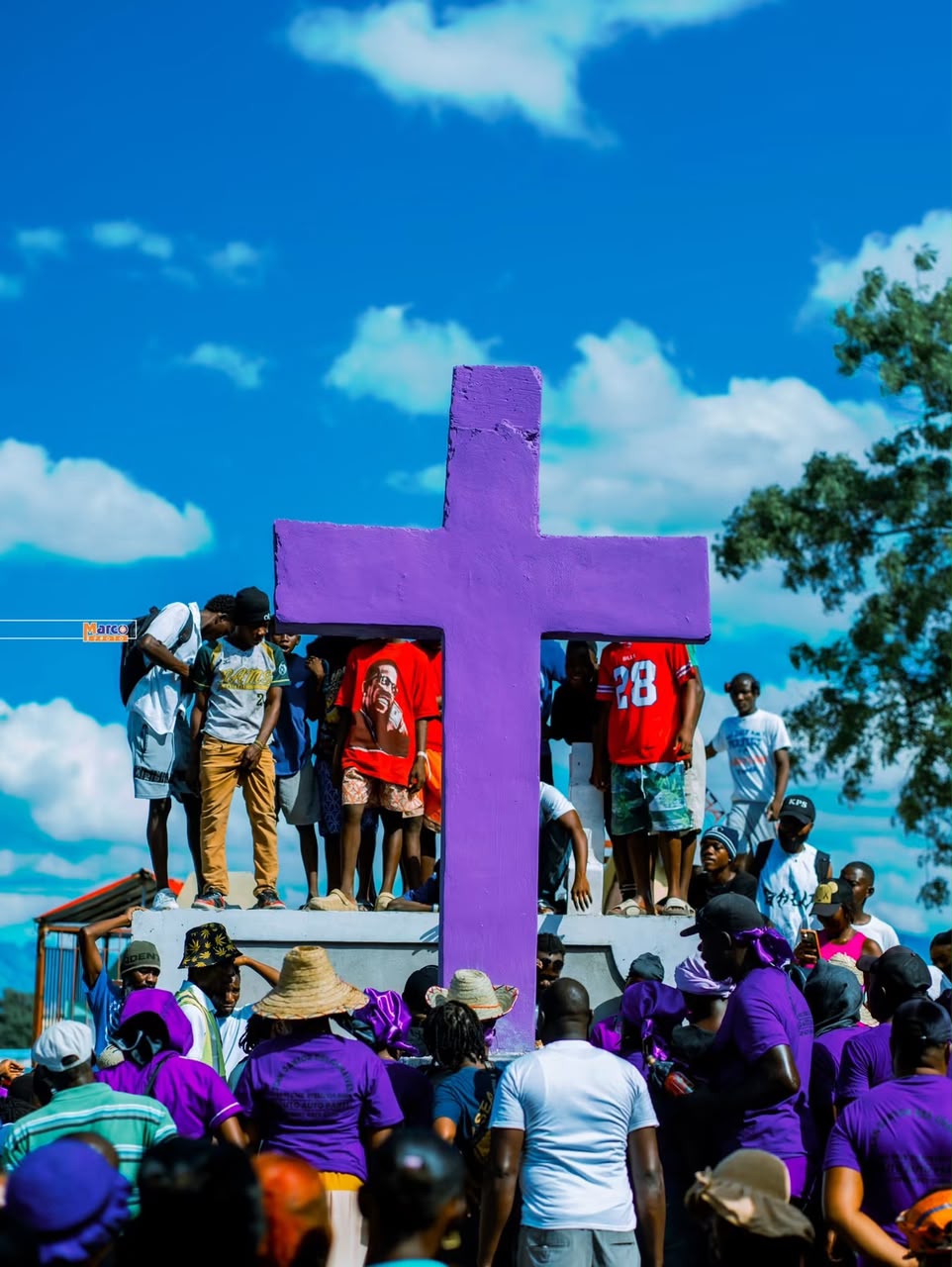
More than a thousand people, dressed in purple and black, marched through the streets of Gonaïves on Sunday, November 1, 2026, for the Day of the Dead.
More than a thousand people, dressed in purple and black, paraded through the streets of Gonaïves on Sunday, November 1, 2026, for the Day of the Dead celebration. Between Vodou rituals, offerings at the cemetery’s grand cross, performances by traditional groups, and moments of reflection, the celebration showcased the different aspects of this day dedicated to remembering the deceased.
Vodou songs echoed through the streets, with candles and tchatchas in hand, while black scarves, faces powdered white, and sticks decorated with veves caught the eye. On Sunday, November 1, the Guedés took over the streets of the City of Independence. Coming from various neighborhoods of the city and surrounding areas, more than a thousand participants joined in the festivities organized for the Day of the Dead.The procession, filled with songs and rhythms typical of Vodou tradition, went through several streets of the city before gathering at the main cemetery. Some participants carried bottles of chili, others had black handkerchiefs tied around their heads and necks, or held pipes in their mouths. In an atmosphere both festive and spiritual, voices rose to sing songs dedicated to the Gédé spirits, especially the excerpt “Gede Nibo, gade sa moun yo fè m ooo,” passionately repeated along Lamartinière Street.Inside the cemetery, the large cross, commonly called Bawon, was one of the main gathering points. People crowded around it to pour a few drops of tafia, leave offerings of food and coffee, light candles, and call upon the spirits of the deceased. Under the symbolic influence of the Guédés, some engaged in circles and various rituals, under the attentive, sometimes amused, eyes of onlookers who had come to watch the celebration.
A few meters away, a different atmosphere took shape. In front of the freshly painted and renovated family vaults, relatives placed flowers, lit candles, and reflected in front of the graves of their departed loved ones. Some, with tears in their eyes, seemed absorbed in the memory of those who are no longer here. These scenes of devotion reminded that the Day of the Dead is not just about festive events and ritual practices; it is also a moment of memory,A Celebration Between Spirituality and Popular Festivities
Outside the cemetery, a stage set up by the Gonaïves city hall hosted performances by several Vodou groups from different neighborhoods and nearby towns. A large crowd had gathered around the space prepared for the occasion, while vendors selling clairin, basil, Florida, and other small products offered their goods to attendees.
For a cultural operator met on site, this celebration holds special significance in preserving collective memory and our traditions.
“There are dates that shouldn’t go unnoticed. Celebrating the Day of the Dead is about honoring the spirit of our ancestors, our deceased close relatives. I’m happy that the city hall and the community members gave special importance to this celebration this year,” he said, while watching a group’s performance.In the different streets of the city, people kept moving between the cemetery, the performance area, and other gathering spots throughout the day. In several shops and busy places, the non-stop playing of roots music and vodou chants also helped to set the mood for the celebration.
In Gonaïves, this 2026 edition of the Day of the Dead highlighted various aspects of a tradition deeply rooted in Haitian culture, namely vodou spirituality, honoring ancestors, remembering departed loved ones, and popular expression. It was a day when the living, in their own way, reconnected with the memory of those who came before them.

