
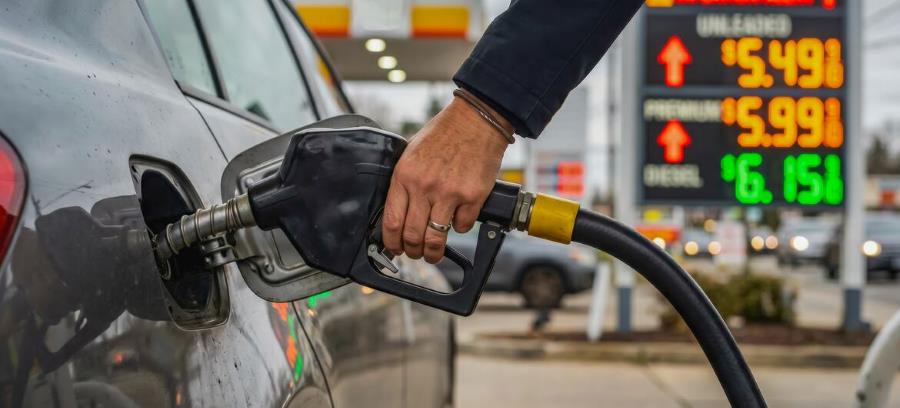
The spike in oil prices caused by the war in the Middle East and the closure of the Strait of Hormuz in February doesn’t hit all economies the same way.
The surge in oil prices caused by the war in the Middle East and the closure of the Strait of Hormuz in February isn’t hitting all economies the same way. At the pump, consumers in developing countries are particularly affected, with price increases far higher than those seen in advanced economies, according to a new UN Conference on Trade and Development (UNCTAD) report.
In Nigeria, diesel prices jumped about 83% between the end of February and the end of August, compared to just 9% in Ireland. In Myanmar, gasoline prices rose around 51%, while the increase was limited to 3% in Sweden.These differences are mainly explained by national fuel tax and subsidy policies, pricing mechanisms, and exchange rate fluctuations. All of these factors determine how much global prices affect consumers.
A surge directly linked to the conflict
The price of Brent crude, the main global benchmark for oil, went from around $70 in January to over $120 in March. The reason: the closure of the Strait of Hormuz, a strategic shipping route through which nearly a fifth of the world’s oil usually passes, which caused major turbulence in the markets.Prices then eased a bit between April and June, thanks to diplomatic progress, before rising again after the failure of negotiations and the resumption of fighting.
Futures markets suggest that prices could stay high until the end of the year. This outlook weighs on fuel and transport bills for both businesses and households.
A domino effect on the cost of living
The impact of this surge goes far beyond just drivers’ budgets. Higher fuel prices increase costs throughout the supply chain: shipping goods becomes more expensive, which then pushes up the prices of food and consumer products.Even households that don’t buy fuel directly are affected by the consequences.
Previous studies on developing economies show that a 25-cent increase per liter in fuel prices can lead to an average drop of more than 5% in household purchasing power.
Countries that rely heavily on imports hit first
Economies that depend strongly on fuel imports are particularly vulnerable to these shocks, highlights UNCTAD. When prices soar, they have to spend more foreign currency on energy supplies, at the expense of other essential needs.In 2023, net fuel imports – that is, import spending minus export revenues – already accounted for a quarter of Cape Verde’s GDP and nearly a fifth of Lebanon’s.
A higher energy bill therefore reduces the resources available to import food, medicine, or equipment. It also limits governments’ ability, often working with tight budgets, to support households dealing with rising living costs.
Reducing dependence
In response to this vulnerability, UNCTAD advocates diversifying energy sources and increasing investment in renewable energy, especially solar and wind.Unlike fossil fuels, whose prices remain exposed to geopolitical tensions and disruptions in trade routes, these energy sources are less vulnerable to external shocks.
The argument is also economic: according to UNCTAD, in more than 90% of cases, renewable energy costs less than new installations running on the cheapest fossil fuels.
For developing countries, speeding up this transition is therefore not only a climate imperative, but also a way to strengthen their energy security and better protect themselves against future oil crises.

