
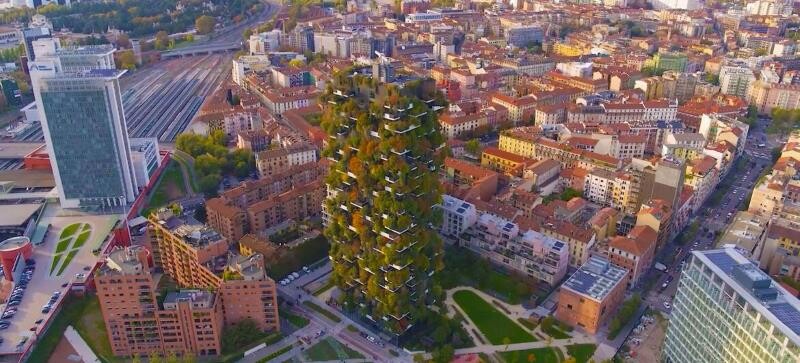
Milan is in the process of moving from being a heavily industrialized city to becoming a leader in eco-friendly urban architecture and sustainability
From homes flooded by the melting of Himalayan glaciers, the human cost of climate change was at the center of discussions at COP31 this Thursday. World leaders focused on protecting cities and vulnerable communities, while activists urged governments to step up their efforts.
Disaster risk financing: a new UN platform aims to unlock over $3 billion to protect 75 million people from climate shocks by 2030.
Climate change is often associated with images of melting glaciers, disappearing forests, and devastating fires. But for millions of city dwellers, the crisis is now hitting right at their doorstep.The signs are everywhere: floodwaters invading homes, unbearable heat in poorly designed housing, or neighborhoods where, due to a lack of proper drainage systems, heavy rains turn into disasters.
“Maybe we need to change… our mindset when we talk and think about climate change,” said Anacláudia Rossbach, Executive Director of UN-Habitat, to UN News on the sidelines of COP31 in Antalya, Turkey.
Her message is clear: cities are on the frontlines of climate change; protecting them means protecting the people who live in them.An elderly woman, smiling, with gray hair and wearing red-framed glasses, dressed in a gold blazer and a colorful scarf, is standing in front of an official COP31 (Antalya, Turkey) sign dedicated to climate change.Anacláudia Rossbach, director of UN-Habitat. A historic moment for cities
For the first time at a United Nations climate conference, the COP31 Leaders’ Summit dedicated a high-level dialogue to urban resilience, adaptation, and climate action.
The meeting brought together national and local leaders, financial institutions, and other partners to tackle a growing challenge: up to three billion people lack adequate housing, while over a billion live in informal settlements, often exposed to floods, landslides, and extreme heat.
In a speech delivered on behalf of Secretary-General António Guterres, UN-Habitat director Anacláudia Rossbach emphasized that housing must be at the heart of climate action.”Housing is a climate action. Urban planning is a climate action. Access to basic services is a climate action,” she said.
Speaking further to UN News, she called for more attention to be given to the most disadvantaged communities, especially those living in informal settlements who have fewer resources to prepare for or recover from disasters.
Protecting them isn’t just about making buildings stronger. It also involves access to drainage systems, sanitation, electricity, and water, all supported by better urban planning and adequate funding.
“We need systemic change,” Ms. Rossbach stated, highlighting the importance of partnerships between governments, banks, businesses, and communities.Signs of progress are noticeable. A new UN-Habitat analysis shows that 80% of national climate plans now include well-developed urban measures, compared to 50% in the previous cycle.
Yet, cities need about $4.5 trillion in climate investments per year until 2030, while current funding covers only about a fifth of that amount.
For Ms. Rossbach, this meeting was a turning point.
“We managed to bring together all the necessary stakeholders at this meeting,” she said, expressing hope that cities can make their voices heard more strongly in future negotiations and gain better access to funding.Mayors Are Taking Action
Another piece of good news: 69 mayors, representing over 250 million people, have committed to continue their climate action for another year as part of the ‘Yearly Offer of Action’ initiative — a 60% increase compared to last year. Their projects include flood warning systems in Addis Ababa, London’s first heat action plan, and incentives to improve the environmental performance of 400 commercial buildings in Melbourne.
World Leaders Confront the Cost of Climate Disasters
On the second day of the Leaders’ Summit, developing countries renewed their calls for help in the face of rising climate-related losses.
The Seychelles warned that bouncing back from increasingly destructive storms and floods can leave small countries stuck in debt, while Nepal pointed out the growing risks for mountain communities, with glaciers melting and extreme weather events getting worse.
After failing to get a specific item on the agenda earlier in the week, Nepal, Bhutan, and Kyrgyzstan joined Tajikistan and Pakistan in calling for better protection for glaciers and mountain communities. Nepal also suggested a ‘From Sagarmatha to the Sea’ partnership to connect mountain communities with coastal ones, while pushing for stronger early warning systems and climate funding.Among other key events, British Prime Minister Andy Burnham announced the appointment of the country’s first special representative for climate security, highlighting the growing links between climate change, food insecurity, migration, and conflict.
Negotiations still at a standstill
In the negotiation rooms, delegates continued to clash over disagreements regarding adaptation funding and the future of fossil fuels.
Small island states called for faster emission cuts, while fossil fuel–producing countries defended their development priorities, illustrating just how hard it is to reach a consensus.Financial commitments have, however, emerged elsewhere. Philanthropic organizations have announced a package of more than $480 million aimed at tackling methane and other potent greenhouse gases, along with an additional $25 million to support emission reductions in seven countries.
Five delegates are lined up, microphones in hand, on a stage at COP31; a man in a navy jacket and traditional headdress is speaking, while four others listen in front of a yellow and blue backdrop.

