
Local conditions and challenges vary a lot for an industry that supplies a third of the world’s protein.
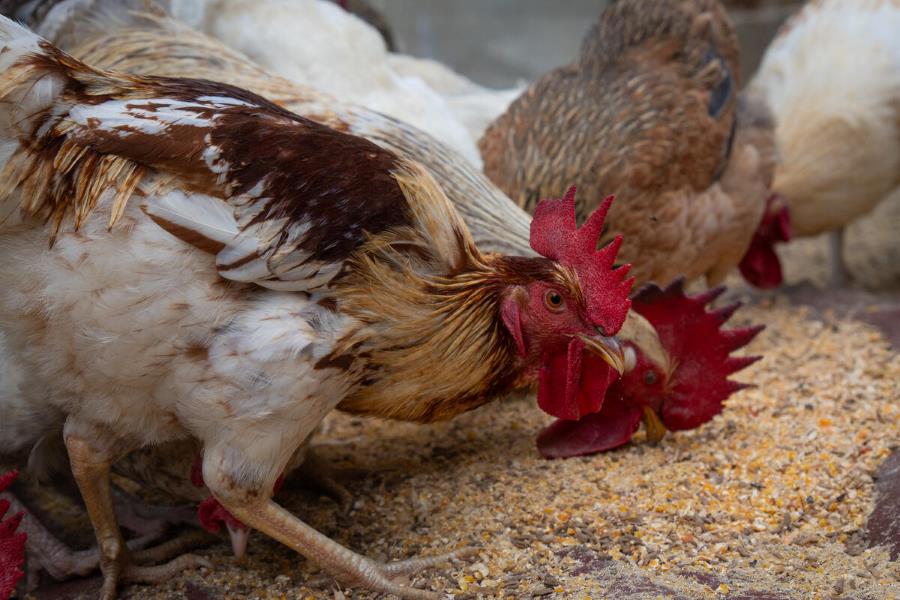
According to a new study by the United Nations Food and Agriculture Organization (FAO), animal production systems provide a third of the world’s total protein intake—mostly from mixed crop-livestock systems and poultry—and are going through a period of major change.
While feedlots and intensive production systems are built on solid economic foundations, the key role of livestock in food security relies on national and local markets; actually, only 15% of meat, 12% of milk and dairy products, and 3% of eggs are traded internationally.At the same time, the livestock sector is undergoing a dynamic transformation that is expected to continue in the coming decades. The competition between animal and human feed for land use — in a context of stabilizing arable land expansion and deforestation — encourages better use of agro-industrial by-products and other less conventional sources of animal feed, as well as pastures and marginal lands, to increase the supply of terrestrial animal protein.Titled ‘Contribution of the livestock sector to food security and sustainable agrifood systems – Benefits, constraints, synergies and trade-offs,’ this report is the third in a series prepared at the request of FAO members. It aims to provide a comprehensive, science-based global assessment of how livestock contributes to food security, sustainable agrifood systems, nutrition, and healthy diets, while also highlighting the main gaps in knowledge.
This document looks at data from published scientific literature as well as relevant policies and legal frameworks, focusing on the types of animal production systems. It examines the benefits, constraints, synergies, and trade-offs these systems face, puts their social, economic, and environmental sustainability into context, and looks at their resilience and contribution to the bioeconomy.“The wide variety of animal breeds and species on our planet allows livestock farming to thrive in very diverse environments — especially in areas that are not ideal or suitable for crops — and to contribute to healthy and varied diets,” points out FAO Director-General Qu Dongyu in the foreword. “However, to maximize this contribution to human and planetary health, the livestock sector has to tackle a whole range of challenges,” he added, mentioning in particular deforestation, land and water use, greenhouse gas (GHG) emissions, competition between human and animal food, herd management, productivity gaps, social equity, animal health and welfare, antimicrobial resistance, as well as the risks of zoonoses and foodborne diseases.The production of animal-based foods (TASF) has more than quintupled since 1961; at the same time, awareness of the role these foods play in achieving food security and nutrition goals has grown, leading to increased investment in the livestock sector since 2000, even though this started from a low base, the report points out.Public investment priorities mainly focus on fighting animal diseases, livestock practices, animal nutrition, genetic improvement, and research infrastructure, while private investments aim to increase productivity on farms—especially in dairy systems—and improve infrastructure. Current trends suggest that more importance will be given in the future to strengthening livestock value chains and market access.
Key Trends
Mixed production systems (crop and livestock) contribute to all three dimensions of sustainability, as well as resilience and the bioeconomy, while highly input-dependent systems get more support because of their higher economic contribution. Pasture-based systems promote environmental and social sustainability, as well as resilience and the bioeconomy, but they contribute relatively less to economic stability compared to other livestock systems.
Mixed systems (crop and livestock) and poultry production systems each account for about 30% of the global supply of animal protein. Pasture-based systems contribute 12%, pig production systems 19%, and feedlot fattening systems only 3%.Ruminants provide 26% of the world’s annual meat production, while monogastrics, like chickens, provide 74%. Cattle account for 81% of global milk production.
Animal-based foods make up an average of 33% of the world’s protein intake, with variations ranging from over 50% in North America, South America, most of Europe, Australia, and New Zealand, to less than 18% in Africa.
The growing demand for animal products (meat, milk, eggs, etc.) is driving the intensification of mixed crop-livestock systems and encouraging a shift toward monogastric farming systems because of their economic efficiency, lower land use, and reduced available labor in rural areas.The livestock sector makes a significant contribution to both formal and informal economies, accounting for 40% of global agricultural GDP, which is estimated at 1.8 trillion dollars.
Losses of animal products during production, handling, storage, and processing are low in high-income countries but high in low- and middle-income countries. This is especially true in sub-Saharan Africa, mainly due to high animal mortality caused by diseases.Livestock systems are responsible for 12% of human-caused greenhouse gas (GHG) emissions, with cattle contributing the most, and enteric methane being a major source of emissions. While low-input, low-density livestock systems emit less GHG per unit of land, systems that rely heavily on external inputs generally have a lower GHG emission intensity per kilogram of product or crude protein.
Livestock can play a key role in the bioeconomy by turning resources that aren’t suitable for human consumption into animal feed and providing products that can be turned into organic fertilizers, bioenergy, and biomaterials.

