
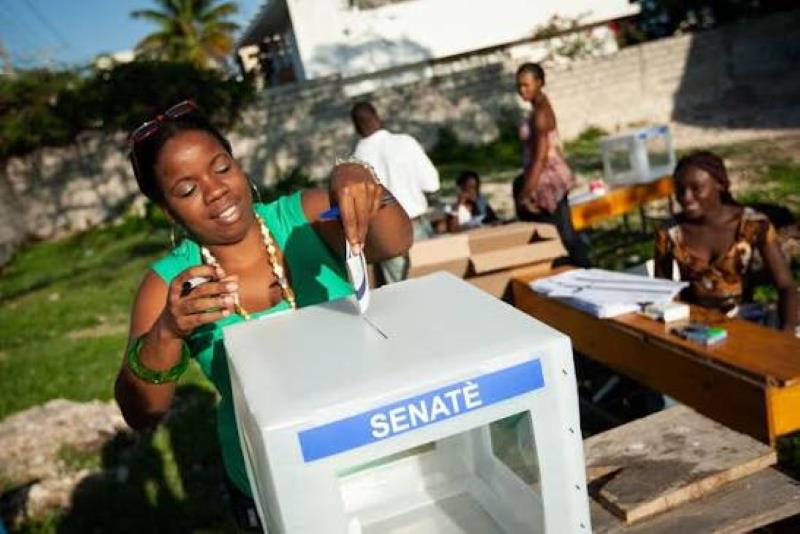
The participation of the Haitian diaspora in elections keeps coming back to the center of the debates.
The participation of the Haitian diaspora in elections keeps coming up at the center of debates. There’s a certain illusion, fueled by the government and the Provisional Electoral Council, that hints at the possibility of participation as early as the next elections. But such a scenario seems, at this stage, quite unrealistic. Allowing the millions of Haitians living abroad to exercise their right to vote under proper and fair conditions would require considerable preparation. At a minimum, it would take two years of intensive planning to set up the necessary mechanisms: identifying and registering voters, establishing a reliable electoral roll, determining the countries and cities where polling stations will be set up, training electoral staff, and ensuring the security and transparency of the vote. Several political, legal, administrative, and logistical issues would also need to be resolved before even considering holding the vote.The challenge is all the more complex because the Haitian diaspora is spread across many countries and continents. Organizing their vote can’t be improvised or decided at the last minute. The diaspora’s participation in elections is a legitimate and desirable goal, but it requires a true national strategy, significant financial resources, and unwavering political will. Without serious preparation, the promise of the diaspora vote risks remaining just an electoral slogan.
Haitians living abroad have been helping to support many families in Haiti for decades and, more broadly, sustaining the national economy through transfers of over four billion U.S. dollars to Haiti, according to recent estimates. They also represent an important pool of skills, experience, and human resources. Yet, their direct involvement in major political decisions in the country, especially through voting, remains an unresolved issue.The debate is far from new. But it takes on a particular importance today at a time when Haiti is trying to rebuild its institutions and redefine the foundations of its political future. Can we really consider an inclusive democracy while leaving out a significant part of the Haitian nation living abroad? The question deserves to be asked sharply. However, a fundamental question arises: which option should be prioritized for the diaspora? Simply allowing them to vote from their country of residence or ensuring their full and complete participation at all levels of political and institutional life in Haiti? Of course, both will be needed. But it’s easier to start with the second option by guaranteeing Haitians living abroad the right to run for office.
An economically active diaspora, but politically sidelined
The Haitian diaspora plays a significant economic role. There’s no doubt about that. Every year, the money sent to families living in Haiti is a boon for many households and businesses. These transfers have helped cushion the impact of economic, political, and social crises. But the diaspora’s contribution isn’t limited to sending money. Thousands of Haitians living in Canada, the United States, France, the Dominican Republic, Chile, and many other countries have skills in areas as diverse as medicine, education, engineering, technology, entrepreneurship, and scientific research. All these skills should be put to good use.The paradox is clear: a significant part of the Haitian community living abroad contributes to the economy and maintains family, cultural, and emotional ties with Haiti, but doesn’t always have the same opportunities to directly take part in political decisions that affect the country’s future. Diaspora voting thus seems like a matter of democratic consistency. It’s a principle that looks good on paper, but putting it into practice is still complicated.Recognizing the right to vote for the diaspora doesn’t mean that implementing it would be easy. Organizing elections in Haiti is already, under current conditions, a major challenge. Setting up a voting system for Haitians living in dozens of different countries would raise significant institutional, legal, financial, and technological issues. The first difficulty concerns voter identification. Who would be allowed to vote? All Haitians living abroad? Those who haven’t given up their Haitian nationality? Those who have a valid Haitian passport or national ID card? The question is particularly tricky because of the weakness of registration and identification systems. Before organizing diaspora voting, there would need to be a reliable electoral register to prevent double registrations, identity theft, and other forms of fraud.
The second difficulty concerns the logistical organization of the election. Could voting take place in Haitian embassies and consulates? Do these diplomatic missions have the necessary infrastructure to accommodate a large number of voters? In some countries where significant Haitian communities live, voters would sometimes have to travel several hundred kilometers to reach a consulate or an embassy that would be turned into a polling station. So, other mechanisms would need to be considered, including increasing the number of polling centers or using certain forms of remote voting.Digital technology: a solution to explore with caution
Electronic voting naturally appears as a potential solution. In theory, it would allow citizens living abroad to participate in elections without having to go to an embassy or consulate. However, this solution also comes with risks. Cybersecurity, vote confidentiality, voter identification, and trust in the system are all major challenges. In a country where trust in electoral institutions remains fragile, introducing a poorly prepared digital system could fuel disputes rather than provide a solution.Haiti shouldn’t see electronic voting as a miracle solution. Such a system would need significant investment, reliable technology infrastructure, strict security measures, and most importantly, institutions capable of ensuring the process is transparent. A gradual approach might be more realistic. Pilot projects could, for example, be considered in certain areas where there’s a high concentration of the Haitian population and where the institutional conditions allow for a properly organized election.The risk of representation disconnected from local realities
The debate about diaspora voting also raises a more political question: how much electoral weight should Haitians living abroad have? Some worry that a numerically significant diaspora could influence elections without directly facing the daily consequences of the decisions made. This is a concern that deserves careful consideration. For example, President Jovenel Moïse was elected with about 500,000 votes. Imagine if a million people from the diaspora had participated in the election and voted for another candidate or a representative defending their own interests. The diaspora could then have a considerable influence on the outcome of national elections, or even become a bigger voting group than the voters living in Haiti if the latter don’t turn out in large numbers.This hypothesis raises a crucial question: should we just allow members of the diaspora to vote from their country of residence, or should we create a real political representation mechanism specifically for them? In the second case, the diaspora could elect its own representatives to Parliament or other institutions, allowing them to fully participate in national political life while preventing their electoral weight from disrupting the balance of representation in Haiti. So, the real debate isn’t just about the ability to vote, but also about how the voice of the diaspora should be integrated into Haiti’s democratic and institutional framework.Voting doesn’t just mean expressing an opinion. It also means taking part in choosing leaders whose decisions have direct consequences for the people living in the country. But this argument shouldn’t automatically lead to exclusion. Haitians in the diaspora often remain deeply connected to the country. Sometimes, they own property there, financially support their families, and some even consider returning one day. Most importantly, the decisions made by Haitian governments can also directly affect them.
Thinking About Real Representation for the Diaspora
Beyond just the right to vote, the debate should also focus on the political representation of the diaspora. Several countries have created systems that allow their citizens living abroad to be represented in national institutions. Haiti could take inspiration from some international experiences while developing a model suited to its own realities. Creating electoral districts reserved for Haitians living abroad, for instance, could allow the diaspora to choose their own representatives without disturbing the political balance between different regions of the country. Such a reform would, however, require thorough constitutional and institutional consideration. It shouldn’t be rushed right before an election. The real challenge is building trust in the process.These questions shouldn’t be used as an excuse for inaction. Instead, they should encourage Haitian authorities, diaspora organizations, and civil society to engage in a real national debate. The diaspora shouldn’t be seen only as a source of remittances or as a pool of skills that are tapped into during crises. If it is an integral part of the Haitian nation, its role in the country’s democratic life needs to be clearly defined. However, the diaspora’s right to vote can’t just be reduced to a political slogan. Implementing it requires serious preparation, credible institutions, and a long-term vision. The real challenge isn’t just letting Haitians abroad cast a ballot. It’s about building a democracy that can include all its citizens, wherever they live, while maintaining legitimacy, transparency, and balance.

