
The population of the Sahel is expected to exceed 500 million people by 2050, making this region one of the fastest-growing in the world.
The population of the Sahel is expected to exceed 500 million by 2050, making this region one of the fastest-growing in the world. This offers significant long-term economic growth opportunities, especially in rural areas, where more than two-thirds of the population live.
However, more investment is needed to fully take advantage of this potential. Ongoing insecurity, population displacement, and limited access to productive resources continue to constrain the economic opportunities available to rural populations, thereby compromising the prospects for sustainable development.The Sahel Joint Program to address the challenges of COVID-19, conflicts, and climate change (SD3C) was set up to tackle these issues. Designed, implemented, and jointly funded by IFAD, FAO, and WFP, this program aims to strengthen resilience and improve livelihoods for about 854,750 people across the region.
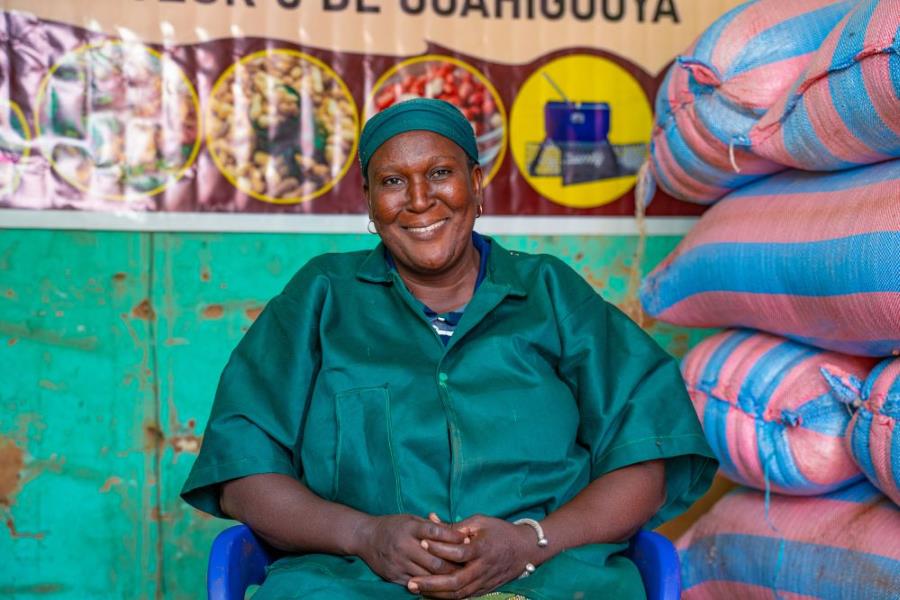
In Burkina Faso, a women’s cooperative supported by the SD3C clearly shows the positive impact of these targeted investments. By turning a small peanut processing craft activity into a rapidly growing business with long-term ambitions, these women are helping drive local economic transformation while boosting the livelihoods of the local community.A Business Taking Off
The lack of equipment and capital used to hold back production and development at the RELWENDE Simplified Cooperative Society (SCOOPS), a women’s cooperative based in Ouahigouya, northern Burkina Faso. Despite strong demand for peanut-based processed products, the cooperative members could only work one day a week, shelling peanuts by hand or with a single machine.
Things changed in 2024 when SCOOPS RELWENDE received, thanks to the SD3C program, a donation of 2 million CFA francs (about 3,500 USD) to set up a peanut processing unit, including ten shellers, storage bags for peanut seeds, and better packaging materials for peanut butter.In less than a year, the cooperative’s processing capacity went from seven bags of peanuts per week to nearly forty. This dramatic increase in production has led to a significant rise in its members’ incomes. SCOOPS’ monthly profits have nearly multiplied tenfold, reaching at least 500,000 CFA francs (870 USD per month), which are now being reinvested into the cooperative’s growth.
This success is based not only on increased production volumes but also on adding more value and taking an effective zero-waste approach. Peanuts that don’t meet compliance standards are turned into peanut butter, whose revenues more than doubled, going from 3.25 million CFA francs (5,688 USD) to 7.6 million CFA francs (13,300 USD). As for the peanut shells, they are repurposed as organic fertilizer.The SCOOPS is made up of 45 women, including internally displaced persons and people living with disabilities.
Making access easier, changing norms
Beyond its rapid growth, SCOOPS RELWENDE has had a considerable impact on the women who make it up. Many of them have accessed credit for the first time. Greater economic security allows them to have a stronger voice in their households and communities, boosting their confidence in their ability to shape their future and contribute to sustainable rural development.The cooperative has also developed a strong network of strategic partners, including farmers’ organizations, microfinance institutions, the Ministry of Agriculture’s technical services, the Chamber of Commerce, as well as traders from Ouahigouya and the capital, Ouagadougou. These partnerships have helped strengthen supply chains, improve product quality, and expand market opportunities.Facing growing demand for its products and increased trust from financial institutions, the cooperative is now preparing a new phase of its development. Ongoing support from the SD3C program allows SCOOPS RELWENDE to expand its network of suppliers and buyers, find land for building a processing unit, obtain certifications for its products, develop its brand identity, and create a business plan capable of attracting bank financing.The success of SCOOPS RELWENDE shows the untapped possibilities available to many businesses in the Sahel that have a local presence, are economically viable, but are mainly held back by limited access to capital and business support services. The SD3C program has shown that relatively modest investments can deliver transformative results when they build on the determination, skills, and resources already present within communities.

