
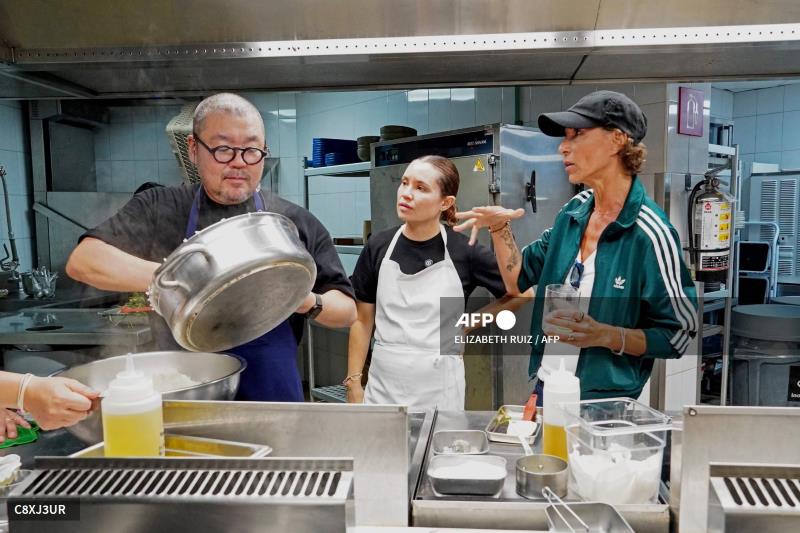
By Anna CUENCA: Ants are disappearing from plates in Brazil, Denmark is turning to cocoa-free chocolate, and Japan is serving fish from warm seas.
By Anna CUENCA
Ants are disappearing from plates in Brazil, Denmark is turning to chocolate without cocoa, and Japan is serving fish from warm seas. Extreme weather events, like El Niño this year, are forcing chefs to adapt their menus.
Scientists predict that the ongoing El Niño episode, which is expected to be exceptional, will increase the risks of droughts, floods, and heatwaves, disrupting agriculture, fishing, and water supplies.Top chefs like Dane Rasmus Munk, Colombian Alvaro Clavijo, and Brazilian Alex Atala are already anticipating an impact on the availability, quality, and price of ingredients.
But for these renowned cooks, gathered at the Apapaxoa food festival in Mexico, this isn’t new: for years, they’ve been adjusting their menus to extreme weather events.
“For the past three years, I’ve been creating an annual menu that I often adjust, almost every week, because some ingredients aren’t available,” Alex Atala told AFP.”Ants, for example, this year they’re only for customers who ask to try them.” His flagship restaurant, D.O.M., in São Paulo, Brazil, reinterprets indigenous traditions using ingredients from remote Amazonian communities.
“Brazil is an enormous country; 90% of transportation is done by truck. When it rains, the roads are flooded; during drought, there are fires. All of this delays a product that should be fresh, and by the time it arrives, it isn’t anymore,” he explains.
Even though he knows how to be flexible, problems with producing or transporting these forest products are “a cultural loss,” a loss of a culinary tradition, he laments.”Year without hurricanes” –
Like the Amazon, the Mediterranean has been facing this challenge for several years now, points out the Spaniard Quique Dacosta.
His restaurant is located in Dénia (southeast), in a region devastated in October 2024 by torrential rains caused by a cold drop – an isolated high-altitude depression. The rains killed nearly 250 people and destroyed vineyards, orange groves, and the Albufera rice crops used for paella.
An extreme weather event “directly attacks the raw materials that are the natural foundation on which we build our cuisine,” says Mr. Dacosta.But it’s also affecting attendance, the chef warns, worried as the season of cold drizzles returns to his region and customers cancel their reservations: ‘It’s going to rain a lot and people aren’t coming anymore,’ he says, highlighting the ‘vulnerability’ of restaurants.
Elsewhere, sometimes it’s the lack of humidity that’s worrying.
‘This is the first year without hurricanes’ in the Mexican Caribbean, notes chef Roberto Solis. While Hurricane Polo is moving through the Mexican Pacific, on the other side of the country, in his native Yucatán, there’s no sign of the usual cyclones.Rationed Water –
“Hurricanes bring moisture, move ocean currents, plankton, and microorganisms in the sea,” he explains, paying attention to the effects this will have on the fish served at Huniik, the restaurant in Mérida – the capital of Yucatan – where he reinvents Mayan traditions.
At his restaurant Alchemist in Copenhagen, Denmark, Rasmus Munk, one of the most innovative chefs on the current scene, turns to a local alternative to cocoa in a market “under heavy pressure”: he uses fermented brewers’ grains, a byproduct of beer brewing that tastes close to chocolate.In Japan, El Niño brings more variety to the plates by attracting fish from warmer seas, notes Yusuke Takada, who at the restaurant La Cime in Osaka combines Japanese ingredients with French cooking techniques.
But overall, concern dominates in the field.
French chef Dominique Crenn, based in San Francisco in the United States, says she tries, in the menus created for her Atelier Crenn, “to make people understand what’s happening” with the climate.
In Colombia, “El Niño hits very hard and we are very worried about our suppliers,” says Alvaro Clavijo. At his restaurant El Chato in Bogota, he’s short of cocoa pulp or Andean tubers. He also explains having to modify his menus.But there’s one factor he can’t control: the water shortage, caused by the drop in rainfall. “We’ve already been feeling rationing for two years now, and in a restaurant, it’s really tricky to manage,” he explains.

